













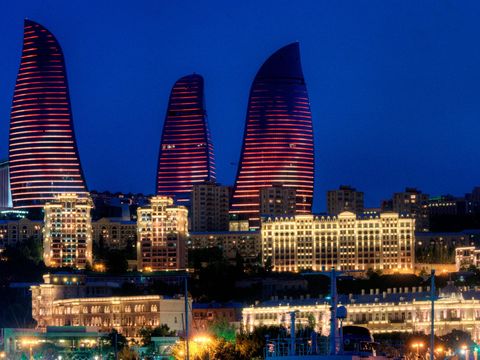
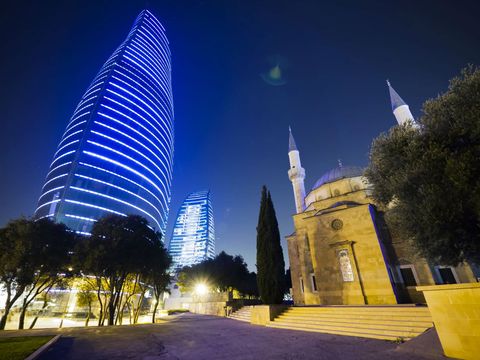
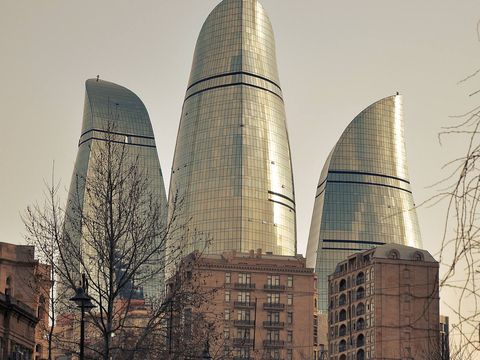
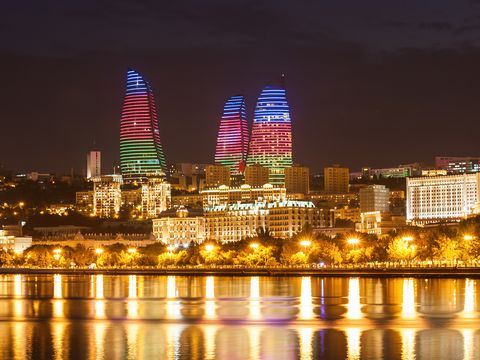
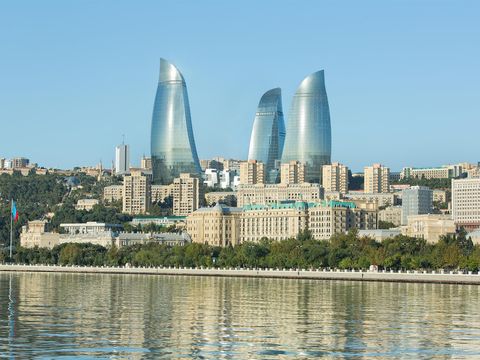
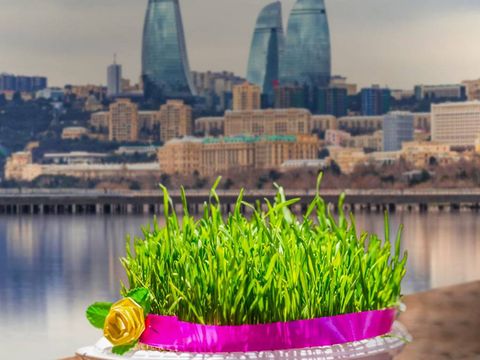
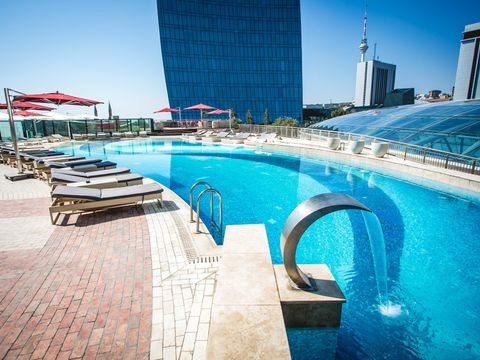
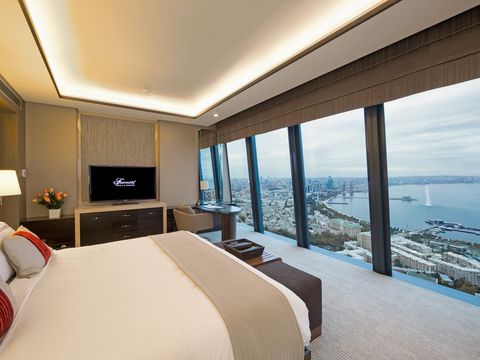
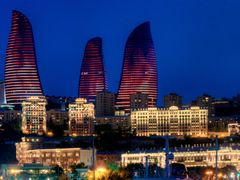

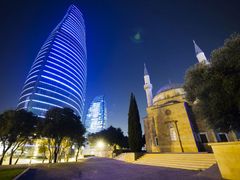
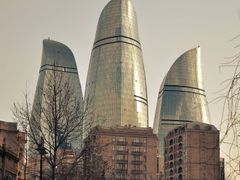
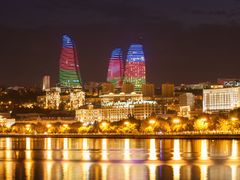
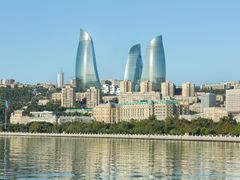
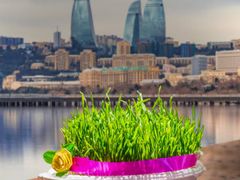
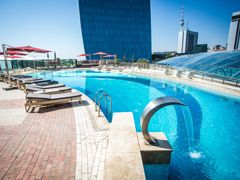



While the Flame Towers themselves are an architectural construct (rather than a natural ecosystem), their presence is part of Baku’s broader environmental and urban context. The hill area offers green-space vantage points (such as nearby parks) from which the towers dominate the skyline.
In broader regional terms, the Absheron peninsula (on which Baku stands) has ecological concerns: years of oil and gas extraction, coastal development and urban sprawl have impacted natural vegetation, shoreline habitats and air quality. The Flame Towers, as part of the city’s modern skyline, reflect a pivot towards modern architecture and tourism rather than purely industrial activity. One interpretive layer: the towers convert a legacy of hydrocarbon-fueled energy (natural gas flares, oil extraction) into an aesthetic and economic asset under visual control.