










+994 55 699 10 50[email protected]
English
Azərbaycanca中國人DeutschEnglishEspañolaFrançaisहिन्दीItaliano日本語한국인TagalogPortuguêsРусскийعربي

Eternal fire of Azerbaijan

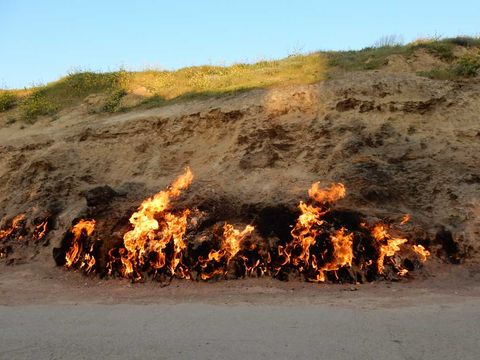
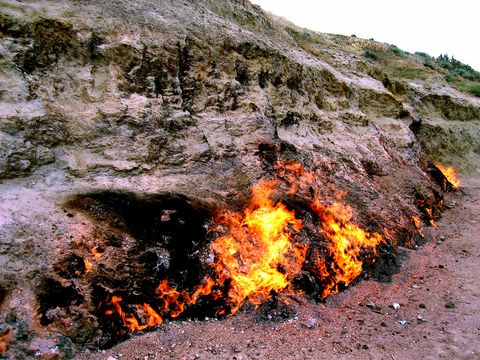
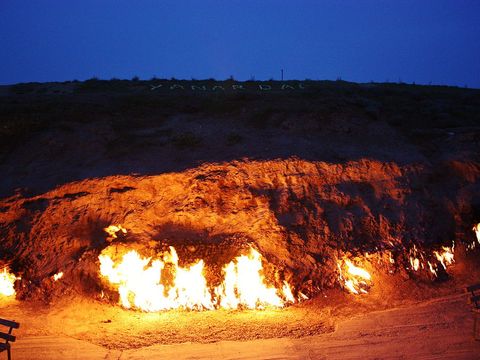
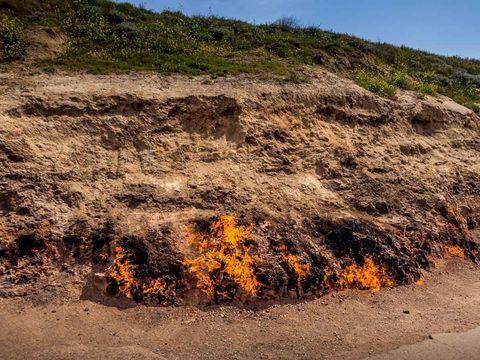
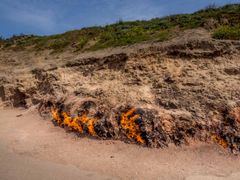
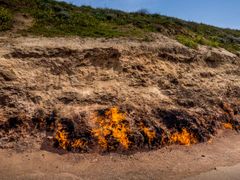
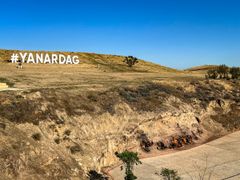
On the windswept slopes of the Absheron Peninsula, just a short drive from Azerbaijan’s capital, lies a place that defies expectation: Yanar Dağ — literally “Burning Mountain”. Here, a steady flame, fed by natural gas seeping through sandstone, has burned for centuries, creating both a geological marvel and a cultural symbol.

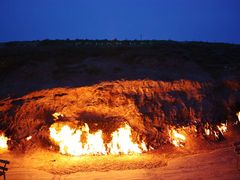
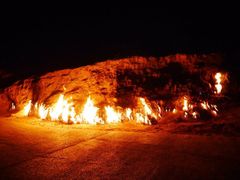
For those seeking things to do in Azerbaijan beyond the urban gloss of Baku, Yanar Dağ offers a compelling blend of nature, legend, science and tourism. In the golden hour at dusk the flickering fire against the Caspian-sea breeze becomes something otherworldly, evoking ancient fire-worship traditions, modern energy realities, and the thrill of witnessing one of the world’s rare natural flames.

In this article we present a full, authoritative guide to Yanar Dağ: from its geological origins and historical significance to practical visitor information, combining the rigour of a historian with the excitement of a travel blogger.

History & Origins

Early Awareness & Fire Worship

Although the specific documented age of Yanar Dağ’s flame is not precisely known, the phenomenon of natural fires fueled by gas seesps is ancient on the Absheron Peninsula. The area’s long association with burning elements gave rise to Azerbaijan’s evocative nickname: “Land of Fire.” In antiquity the region was part of Zoroastrian cultural orbit, where fire held sacred significance. The ever-burning flame of Yanar Dağ would naturally have been imbued with spiritual meaning, even if direct written records are scarce.

Modern Recognition and Protection

On 2 May 2007, by presidential decree of the Republic of Azerbaijan, the “Yanar Dağ” site was officially declared a State Historical, Cultural and Natural Reserve. The reserve covers an area of 64.55 hectares.Following renovation works, the reserve reopened on 12 June 2019. Today it is managed by the State Tourism Agency of the Republic of Azerbaijan.

Legends & Literary Mentions

While there are no surviving ancient manuscripts that single out Yanar Dağ by name in detail, explorers such as Marco Polo mention fiery phenomena on the Absheron Peninsula during the 13th century. Local legends add colour: one tale says a shepherd accidentally ignited the gas seep with a cigarette, and the hillside has burned ever since.

Location & Terrain

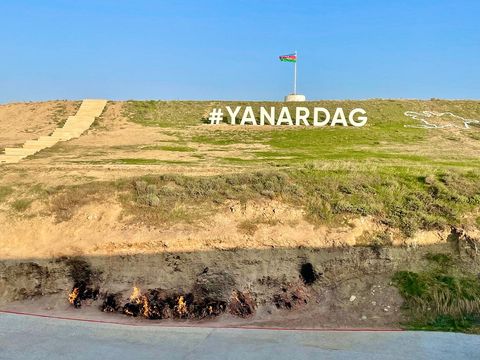
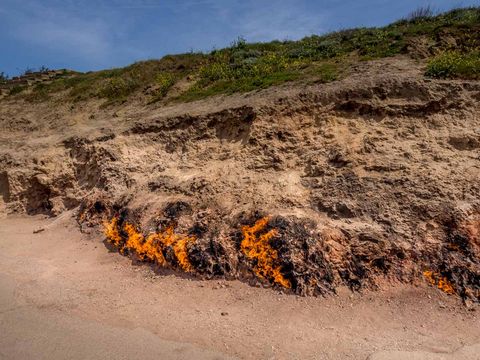
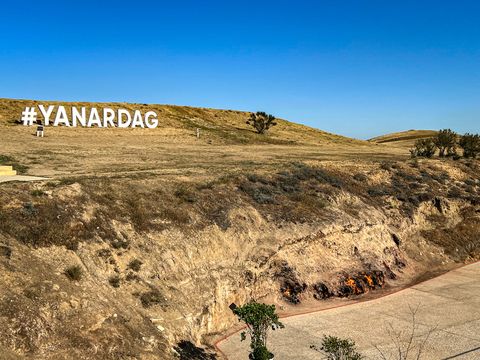
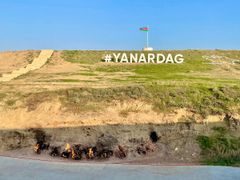
Yanar Dağ is located near the village of Məmmədli (Mammadli) on the Absheron Peninsula, roughly 27 km from downtown Baku. The area is part of the Absheron District.The reserve covers approximately 64.55 ha of terrain comprising a hillside, sandstone scarp, small ridges, and the surrounding semi-arid steppe.

Geology & Flame Mechanism

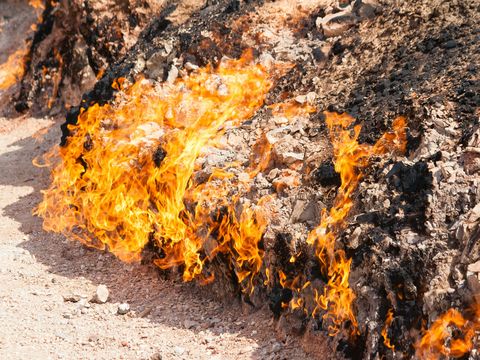
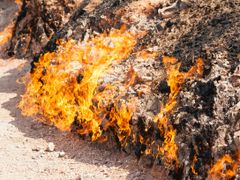
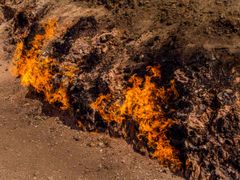
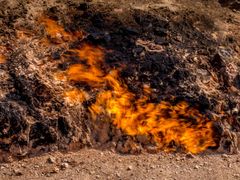
Unlike typical volcanic activity, the flames at Yanar Dağ are caused by the seepage of hydrocarbon gases (mainly methane) from underground reservoirs. These gases rise through porous sandstone layers and emerge along fault lines and cracks in the hillside. The flame can reach heights of up to 3 metres (though some older sources claim up to 10 m). While the ground surface is dry, the fire remains steady through rain or snow—nothing seems to extinguish it, thanks to the constant gas supply.

Climate & Seasonal Notes

The Absheron Peninsula has a semi-arid climate: hot summers, mild winters, and the strong influence of the Caspian Sea. Even in colder months the flames of Yanar Dağ continue to burn, making it a year-round attraction. The best effect is near dusk when ambient light is low.

While Yanar Dağ is primarily known for its geological fire, it sits within a broader ecological context:

  • The surrounding steppe vegetation is typical of Absheron: drought-tolerant shrubs, grasses, and adapted fauna.
  • Environmental studies for reserve management are limited publicly, but the site’s status as a nature-cultural reserve indicates protection of both geology and landscape.
  • The very presence of a persistent flame and associated gas seep means the immediate micro-environment is unique: soil and air chemistry may differ, and human management has created visitor pathways to balance access with protection.

Although hydrology (rivers, lakes) is not dominant here, the site underscores the interplay of natural resource extraction (oil & gas) and tourism, making it part of Azerbaijan’s broader landscape of energy-rich land and evolving environmental awareness.

Cultural & Practical Importance

Cultural Significance

Yanar Dağ has long served not only as a natural wonder but as a cultural touchstone. The eternal flame resonates with fire-worship traditions of Zoroastrianism in the region. The notion of fire as sacred is central to Azerbaijani heritage and identity — the country’s “Land of Fire” branding stems partly from phenomena like Yanar Dağ

Practical & Tourism Use

Today, Yanar Dağ is a prominent attraction in the region of Absheron. Its proximity to Baku makes it an easy day-trip destination for both international visitors and locals. Recent developments have included visitor infrastructure: a museum, an amphitheatre, café and guided tour services. The site also contributes to local tourism-economics: jobs, small businesses (cafés, souvenir stands), and combined day-trip packages with other attractions. It serves as both educational (geology+culture) and experiential (visitors can warm their hands near the flame, photograph, and feel the heat).

Things to Do / Activities

Observe the continuous flame — the main spectacle. Best at dusk when the glow contrasts with the darkening sky.

Visit the on-site museum / visitor centre — explains the geology, history and cultural context of Yanar Dağ.     

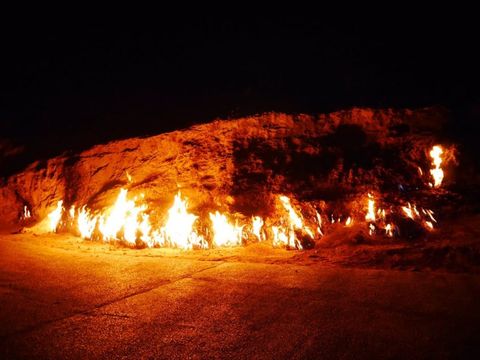
Photography — both day and night offer different atmospheres. Sitting near the flame, capturing the glow behind low scrub vegetation, or the night-scene near Baku’s lights.

Guided tours — Available on-site (language options) for 2-hour segments. 

Combine with other nearby sites — For example, pairing Yanar Dağ with Ateshgah Fire Temple or the mud volcanoes of Absheron enables a fuller “Land of Fire” experience.

Short walking & contemplation — The site is compact; spend 30–60 minutes strolling along the fire line, reading interpretive signs, and relaxing in the amphitheatre area.

Visitor Information

Location: Village of Məmmədli (Mammadli), Absheron Peninsula, Azerbaijan. Approximately 27 km north-east of Baku city centre. Entrance Fees (2025):

  • Local visitors: 2 AZN
  • Foreign visitors: 9 AZN
  • University students (with valid ID): 1 AZN
  • Guided tours (2 hours): Azerbaijani language – 3 AZN; other languages – 10 AZN
  • Combo ticket (Yanar Dağ + Ateshgah): 15 AZN (valid for one person, 72 hours)

How to reach:

• By car/taxi: Drive from Baku (~20–30 minutes) via the Baku-Məmmədli road.

• Public transport: Train to Məmmədli, then taxi to the reserve.

  Facilities: Visitor centre, museum, café, amphitheatre, restrooms, parking. Major renovation completed 2019. 

  Best time to visit: Late afternoon to evening for maximum visual impact of the flames. Clear weather aids visibility; windy or cooler evenings add dramatic effect.   

  Typical duration: 30 to 60 minutes is sufficient to see the main fire phenomena and take photos; 1–2 hours if using guided tour and museum.           

  Notes: Dress modestly if combining with religious/cultural sites; the hillside can be warm near flame — keep safe distance and supervise children.

Nearby Attractions

Nearby Attractions

Ateshgah Fire Temple (Surakhani) – historic fire-temple site of Zoroastrian origin, located nearby; often combined in tours.
Mud volcanoes of the Absheron Peninsula – unique natural phenomena of Azerbaijan.
Baku city core – Old City (Icherisheher), Flame Towers, Seaside Boulevard.
Shoreline of the Caspian Sea – accessible from drive out to Yanar Dağ.

Tours with Old City Tours

At Old City Tours, we include Yanar Dağ in several curated experiences:

  • “Fire & Flame Day Trip” – A half-day excursion from Baku, stopping at Yanar Dağ followed by Ateshgah and a seaside pause.
  • “Absheron Peninsula Private Tour” – A full-day private driver tour incorporating Yanar Dağ, mud volcanoes, and fishing-village visits. Our guides provide onsite commentary on the flame’s geology, mythological significance and photographic vantage points. Let us tailor the things to do in Absheron for you — book ahead for evening visits.

FAQ

Why does Yanar Dağ keep burning, even in rain or snow?

Because the flame is sustained by natural gas seeping from underground reservoirs through porous sandstone. The steady supply means surface weather has little effect.

Can I get close to the flame? Is it safe?

Yes, there are designated walkways and observation platforms. Visitors are advised to keep a safe distance and follow signage — the ground near the flame will be hot.

Is an entrance fee required and is it expensive?

Yes — as of 2025, foreign visitors pay 9 AZN. Guided tours cost extra. The fee is modest and supports reserve maintenance.

What is the best time of day to visit Yanar Dağ?

Late afternoon into early evening is ideal. The flame is more visually dramatic against dusk or night sky. But daytime visits are possible too.

How long should I plan for the visit?

A minimum of 30–60 minutes is sufficient. If you combine the museum or guided tour, allow 1–2 hours. Some tours bundle it with other sites for half-day commitments.

Is Yanar Dağ suitable for families with children?

Yes, families can visit easily. The site is accessible, but keep children supervised near flame areas and follow safety signage.

Can Yanar Dağ be combined with other attractions?

Definitely. Ateshgah Fire Temple, mud volcanoes and Baku coastal sites are all within reach. Combine for a full “Land of Fire” experience.

Conclusion

A visit to Yanar Dağ is more than a stop on a map — it’s a journey into earth’s hidden flames and ancient cultural currents. From the flickering fireline on a windswept hillside to the echoes of Zoroastrian devotion and modern-day tourism, Yanar Dağ epitomises the rich interplay of nature, history and human wonder in Azerbaijan.
Join us at Old City Tours, and let us guide you to this extraordinary attraction in the Absheron Peninsula. Whether you’re photographing the eternal flame at dusk or absorbing the geological story behind it, Yanar Dağ will leave you with something unforgettable. Book your tour and experience the “Burning Mountain” for yourself.

Sources / References

• “Yanar Dağ – State Historical, Cultural and Natural Reserve” official site. 

• Wikipedia: “Yanar Dagh” entry.

• President of Azerbaijan news: Inauguration of Yangar Dagh reserve.

• Archnet: “Yanardag Museum and Visitor Centre” – architectural and geological context.

• Additional travel & geology sources (WanderOn, TripXL, Rome2Rio).  

Tours to Burning Mountain