+994 55 699 10 50[email protected]
English
Azərbaycanca中國人DeutschEnglishEspañolaFrançaisहिन्दीItaliano日本語한국인TagalogPortuguêsРусскийعربي

Mud Volcanoes

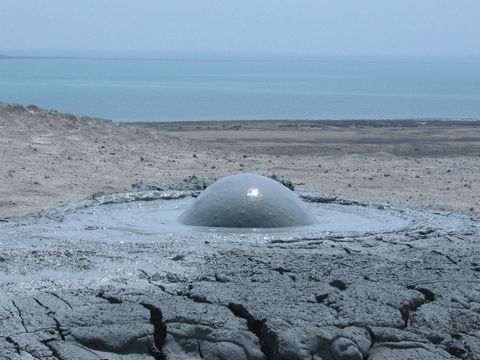
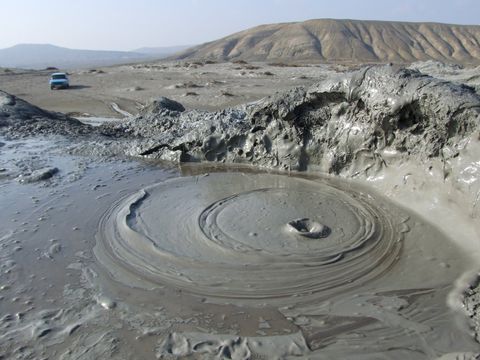
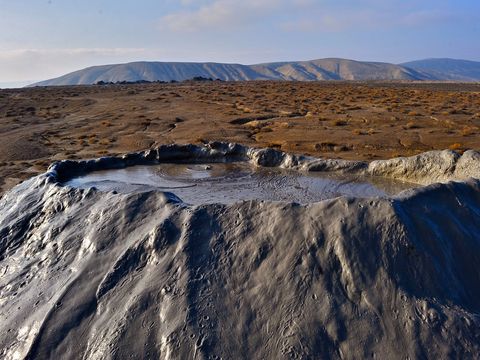
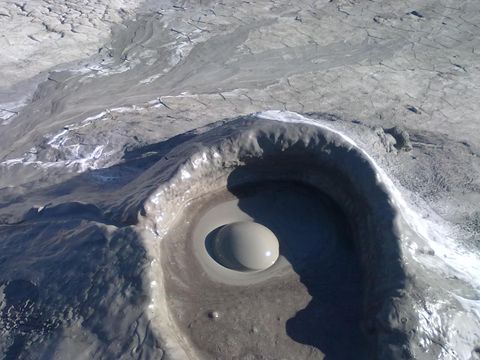
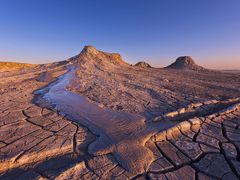
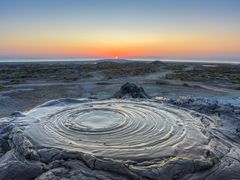
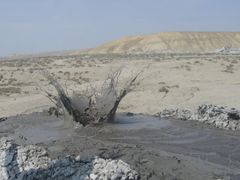
Just a short drive from Baku, the bubbling mounds of clay, gas and water known as the mud volcanoes of Azerbaijan offer both a dramatic spectacle and a deep-time window into our planet’s forces. While many travellers seek volcanoes of fire, here you’ll discover volcanoes of mud — unique, powerful, and surprisingly serene. Azerbaijan boasts one of the highest concentrations of these phenomena on Earth, making the region a must-see for geology enthusiasts, adventurous travellers and those drawn to the unusual.

On this page you will find a comprehensive and authoritative guide to the mud volcanoes of Azerbaijan – their origin, geology, ecology and culture – and how you can experience them as part of a tour with Old City Tours.

History & Origins

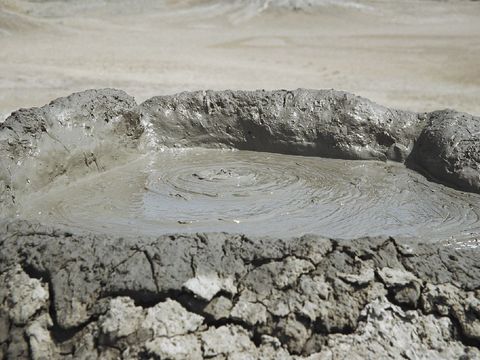
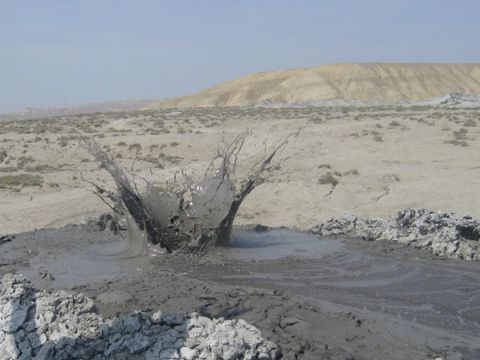
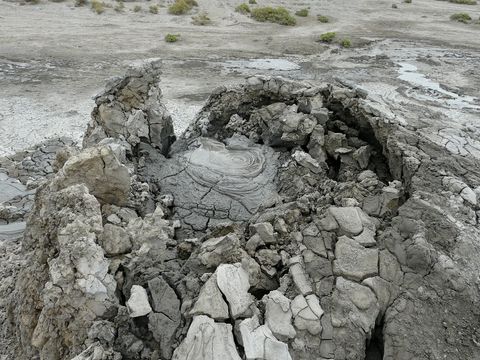
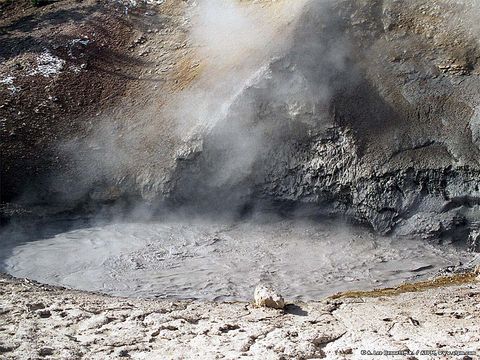
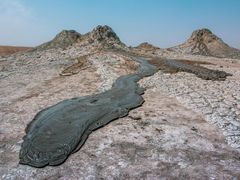
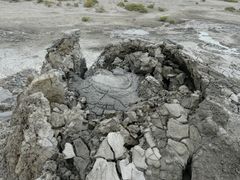
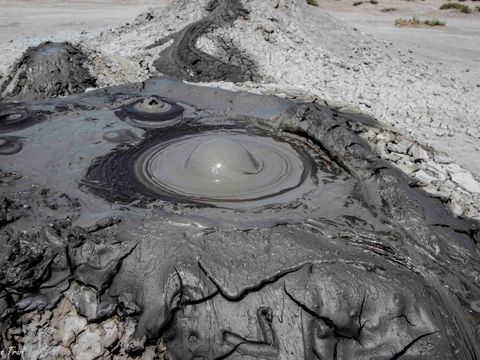
The term “mud volcano” refers to a geological formation in which gases and fluids from deep beneath the Earth’s surface force a mixture of mud, water and rock fragments upward through weak zones in the crust — producing cone-shaped mounds, breccia flows, or craters. 

In Azerbaijan, this phenomenon is especially energetic. The country lies within the tectonically active zone formed by the convergence of the Arabian and Eurasian plates — pushing sediments, hydrocarbons and clay-rich layers into motion. 

According to official tourism and geological sources:

• More than 220 on-shore mud volcanoes have been documented in Azerbaijan (Absheron peninsula, Gobustan, Shirvan plain, Samur-Davachi region) and over 140 submarine ones beneath the Caspian Sea.

• These volcanoes have been active for tens of thousands of years; studies indicate activity during the Middle to Upper Pleistocene.

• Historical records show around 50 volcanoes erupted about 200 times since 1810.

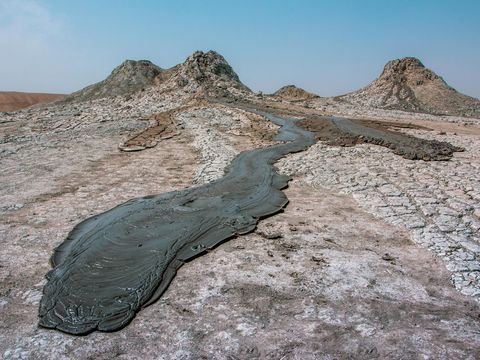
These eruptions are not the classic lava flows – rather they are explosions or flows of mud and gas, sometimes accompanied by flames when methane ignites at the surface. For example, eruptions have produced jets of flame reaching many meters high.

Local names reflect the phenomena: in Azerbaijani you’ll find “pilpila”, “yanardagh”, “bozdagh”, “gaynacha” used for mud volcanoes.

In recognition of their uniqueness, many of these volcanoes are included in the Mud Volcanoes Group of Baku and Absheron Peninsula State Nature Reserve (established in 2007) to protect their natural state and restrict construction in zones at risk of eruption. 

Geography & Hydrology

Location & Extent

The mud volcanoes are distributed across several regions in Azerbaijan: the Absheron Peninsular and its environs (including the Baku Archipelago), the Gobustan and Shirvan plains, and off-shore in the Caspian Sea.

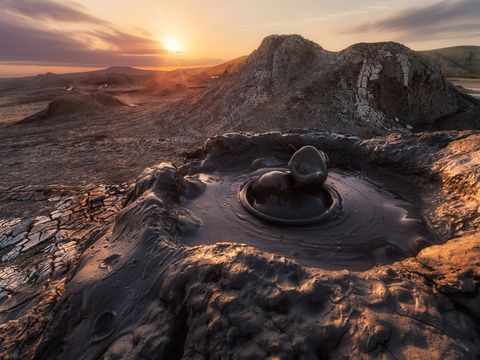
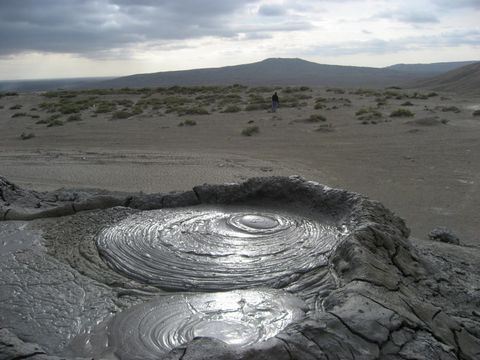
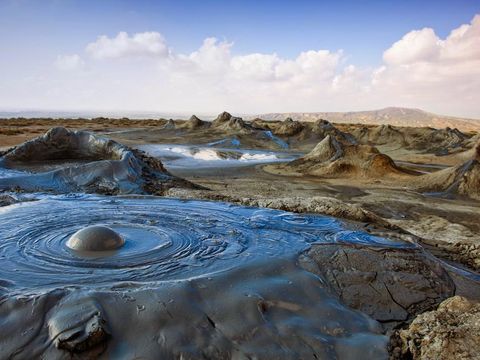
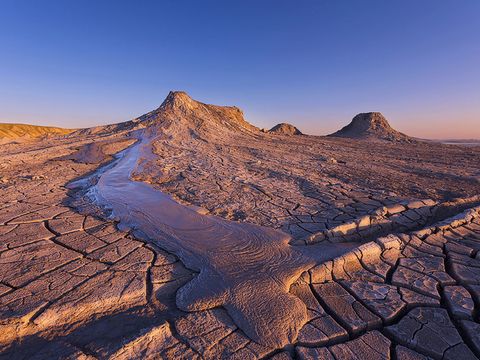
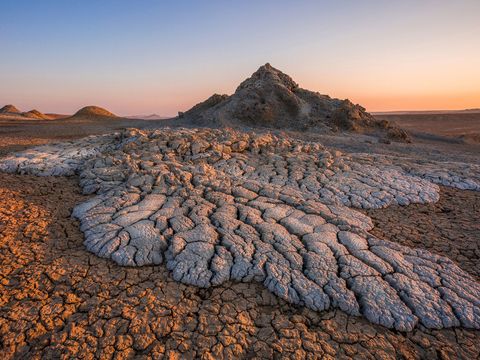
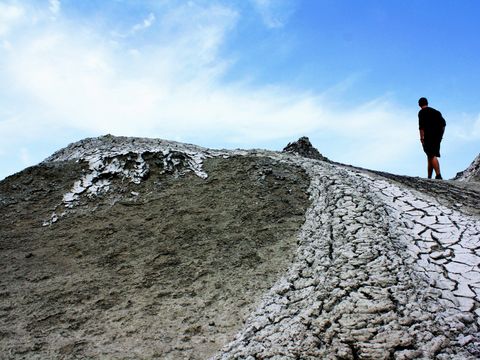
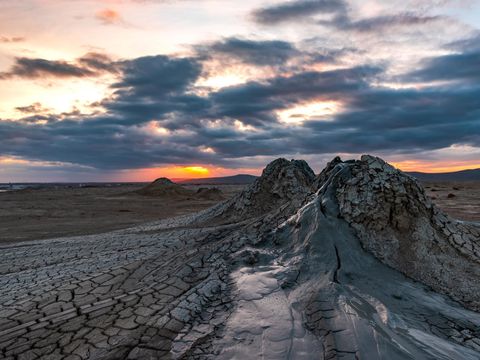
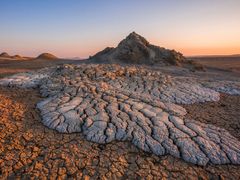
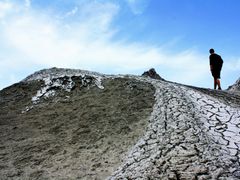
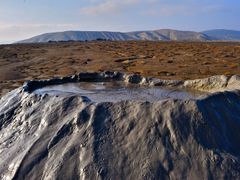
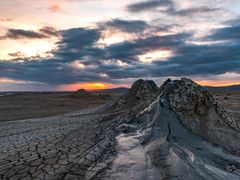
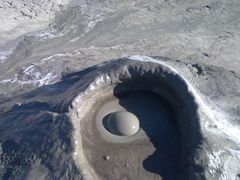
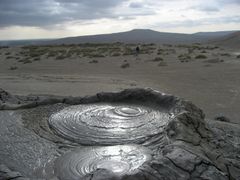
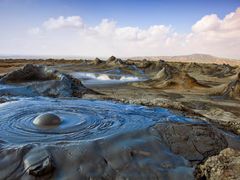
On land, many volcanoes appear as grey or brown cones or mounds, some tens of metres high, with wide bases. Offshore, submarine vents create islands or underwater eruptions.  

Formation & Depth

Geological research shows that the source of the mud, water and gas typically lies several kilometres deep:

• The expelled gases often originate from depths of 7-15 km in the South Caspian Basin.

• The clay-mud matrix is mobilised often from depths of 3-4 km or more, related to the deep burial of the Maykop formation (Oligocene–Lower Miocene) rich in organic matter.  

Once the pressure builds (from hydrocarbon generation, sediment overburden, tectonic stress), the mud-gas mixture finds a path to the surface along fractures and faults. 

Climate & Seasonal Effects

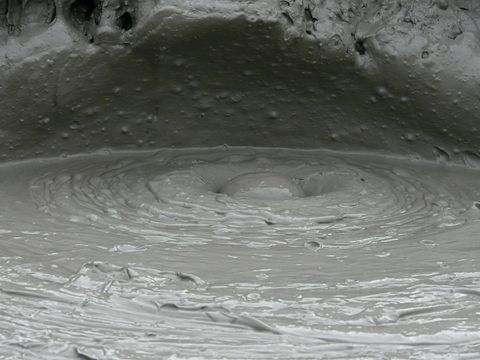
Because the volcanoes are land formations (and some offshore), their appearance and access can be affected by weather: in wet seasons the terrain becomes slippery, vehicle access may be harder, and the visual contrast of fresh mud flows is stronger after rainfall or eruption. On dry days, the site tends to have typical semi-desert steppe characteristics, especially near Absheron.
Ecology & Regional Context

While the mud volcanoes may appear rather raw and barren, they exist within broader ecological and geological systems.

Flora & Fauna

The immediate vicinity of the vents often features sparse vegetation (due to gas emissions, saline-rich soils and shifting ground). However, the wider regions (e.g., the Gobustan area) support steppe vegetation, semi-desert shrubs and wildlife adapted to these rugged landscapes.

Environmental & Conservation Issues

  • The region’s mud volcanoes are intimately tied to hydrocarbon systems (oil and gas fields). The activity of mud volcanoes thus offers insight into subsurface processes, and sometimes presents geohazard risks (e.g., sudden eruptions) for infrastructure.
  • Because the mud contains minerals and organic substances, they have been historically used for “therapeutic” or cosmetic purposes (though travelers should adopt caution).
  • The creation of the State Nature Reserve (12 322.84 ha, protecting some 43 volcanoes) aims to prevent inappropriate construction and to maintain the natural state of these dynamic formations.

Cultural & Folklore

Though specific ancient traveller writings may be limited, the very presence of these unusual landforms has long sparked attention. The use of local names (pilpila, yanardagh etc.) suggests a vernacular recognition of bubbling terrains and gas-fired features. Over time the volcanoes have become part of Azerbaijan’s image as the “Land of Fire” (thanks also to natural gas seeps) and are woven into stories of land, energy and transformation.
Practical Use

The link between mud volcanoes and underlying hydrocarbon deposits is well-documented: many of Azerbaijan’s oil and gas fields are spatially associated with mud volcano activity zones.

The mineral-rich mud flows and breccia have been used in construction, chemical and even cosmetic industries within the country. 

As tourist and educational attractions they bring visitors to regions outside just Baku’s city centre, adding economic value and diversifying the experience for inbound tourism.


    Things to Do / Activities

    Visitors to the mud volcanoes can enjoy a range of experiences.

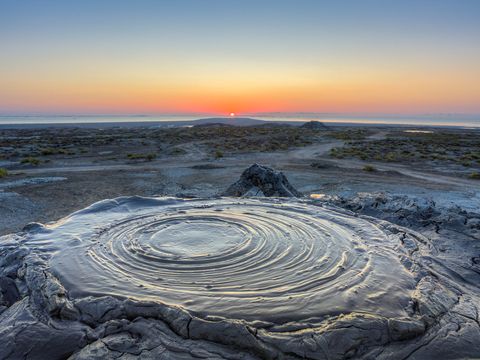
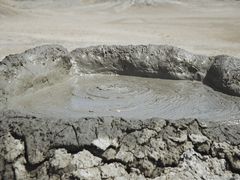
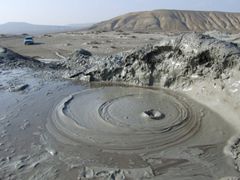
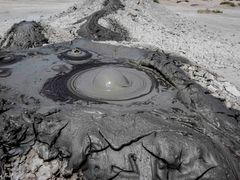
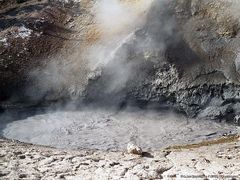
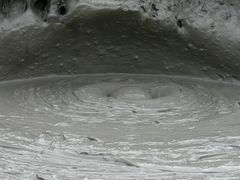
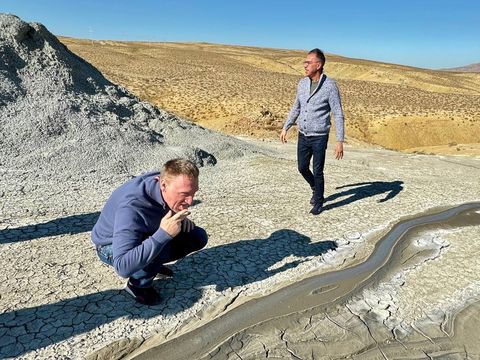
    • Geo-walks & boardwalks around selected cones: witnessing steaming mud pits, bubbling craters, and the distinctive landscape of extruded breccia.
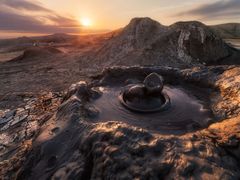
    • Photography of dramatic shapes, fresh mud flows, and panoramic views of plains or nearby Caspian Sea coastline.
    • Educational interpretation: some sites (for example the tourist complex at the “Mud Volcanoes Tourist Complex”) provide info centres explaining the geology, eruption dynamics and environmental context.
    • Quad-bike or off-road vehicle experiences in designated zones (if offered by the tourist complex) to reach more remote cones.
    • Combine with other attractions: Visit nearby sites such as the rock-art landscapes of Gobustan Rock Art Cultural Landscape or natural gas flame hills like Yanar Dagh to make a full day of nature and geology.

    Visitor Information

    Location & Access

    While there are multiple mud volcano sites around Azerbaijan, many tours focus on those in the Gobustan or Absheron Peninsula region (within ~40-70 km of Baku). Official tourist-complex information points to the “Mud Volcanoes Tourism Complex”. 

    From Baku, travellers typically head by car or 4×4 through Absheron, then over relatively rough terrain to the cones. Roads may be partly unpaved and depending on recent weather, access may be more difficult.

    Best Time to Visit

    Dry seasons (spring to early autumn) offer easier access and clearer views. After heavy rain or in winter the approach may be muddy and slip-prone. Daylight general tours are recommended. Because the volcanoes release gas and can sometimes erupt suddenly, afternoon visits are generally safe if guided.

    Duration & Facilities

    You should allocate around 2–3 hours on-site to explore a main cone area, take photographs, read interpretive panels and perhaps walk among smaller vents. Facilities may be limited (toilets, refreshments) so bring water and snacks. At the tourist complex mentioned above, there is an info centre and offered services (e.g., rental vehicles) for convenience.     

    Entrance Fee

    At the tourist complex website, tickets are required for entry. For more remote cones visited by tours, there may be no formal entrance fee, but this depends on the operator.

    Safety & Visitor Tips

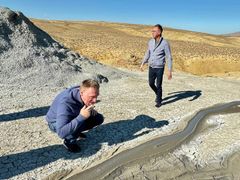
    • Wear sturdy shoes and clothes you don’t mind getting muddy — mud splashes are common.
    • Avoid standing directly over bubbling vents or in areas where gas may accumulate. Guided tours are preferred for safety.
    • Respect protected zones: some cones are inside the State Nature Reserve and may have restricted access.
    • Don’t attempt to dig or collect large mud blocks or breccia without permission — conservation rules may apply.
    • Check with your tour operator or local guide about current activity: some volcanoes may emit gas strongly or have fresh eruptions.

    Nearby Attractions

    Tours to Mud Volcanoes

    Tours to Mud Volcanoes

    At Old City Tours we offer half- and full-day guided trips that include the mud volcanoes — for example:

    • Gobustan & Mud Volcanoes Tour — depart from Baku, explore Gobustan rock-art and the nearby mud-volcano zone.
    • Private Mud Volcano Experience — for those who prefer a flexible schedule, off-road vehicle access, and fewer crowds.

    Our guides will provide scientific commentary on the geology, historical context, folklore, and current activity, ensuring you both enjoy the spectacle and understand the significance of what you’re seeing.

    FAQ

    Are the mud volcanoes dangerous?

    Generally the landforms are safe to visit when accessed via guided tours on designated paths. However, they do involve gas emissions and occasional eruptions, so staying on marked routes, heeding local guidance and avoiding vent holes is essential.

    Can I see a volcano erupting?

    Eruptions at mud volcanoes are less predictable than standard fire-volcanoes, and may involve mud flows or gas bursts rather than dramatic lava. While you may witness bubbling or small flows, a major eruption is rare and should not be expected as part of a tour.

    What should I wear / bring?

    Wear sturdy walking shoes, ideally waterproof or easy to clean. Bring a change of clothes or be prepared for mud splashes. A hat, sunglasses and water bottle are advisable. A camera is strongly recommended.
    Is there an entrance fee to visit the Mud Volcanoes?

    Yes — at the official tourist complex for mud volcano visits, tickets are required. For other sites visited by tours, fees depend on the provider. Always check ahead with your tour operator.

    How long does a visit take?

    Plan for around 2 to 3 hours at the volcano site itself. If combined with other attractions (e.g., Gobustan rock art) it may become a half-day or full-day outing.

    Are the mud volcanoes accessible year-round?

    Yes, though access is easier in the dry months (spring to early autumn). In wet or winter months the terrain may be more challenging.

    Can children visit? Is it family-friendly?

    Yes, children can visit, and many families do. However, ensure children stay close to the group, keep away from bubbling vents, and wear appropriate shoes. A shorter visit may work better for younger children.

    Conclusion

    If you’re seeking something beyond the ordinary tourist path in Azerbaijan, the mud volcanoes offer a journey into the Earth’s inner workings, set against the dramatic backdrop of the Absheron-Caspian region. These bubbling craters, gas-rich mounds and ancient terrains are part science, part spectacle — and entirely memorable.
    With Old City Tours as your guide, you’ll not only reach these remote geological wonders safely but also gain contextual insight: from deep-time formation to modern-day folklore, from scientific intrigue to vivid landscapes. Book your volcano experience and discover one of Azerbaijan’s most extraordinary natural attractions.

    Sources / References

    Azerbaijan.az – "Mud Volcanoes" (Official Tourism Site)

    Mud-Volcanoes.heritage.org.az – Mud Volcanoes Tourism Complex (official)

    Wikipedia – “Mud volcanoes of Azerbaijan”

    SCIRP – Mud volcanoes in the South Caspian basin: Nature and estimated depth of its products.

    MDPI – “Far-Field Earthquake-Induced Crustal Deformation and Mud Volcanoes…”