+994 55 699 10 50[email protected]
English
Azərbaycanca中國人DeutschEnglishEspañolaFrançaisहिन्दीItaliano日本語한국인TagalogPortuguêsРусскийعربي

Fire Temple of Baku

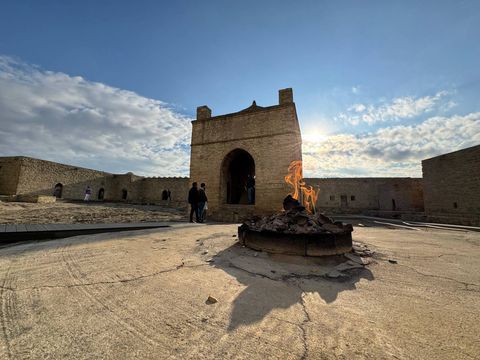
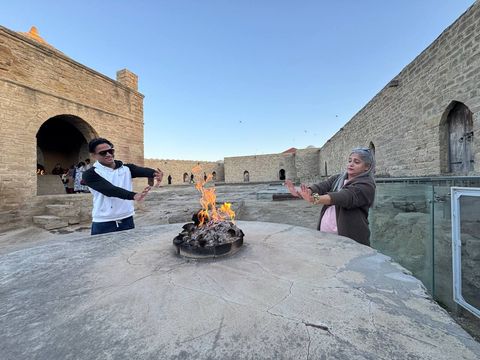
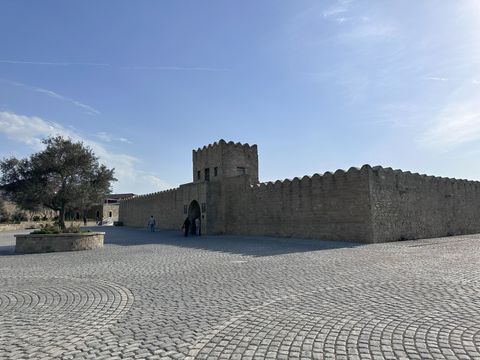
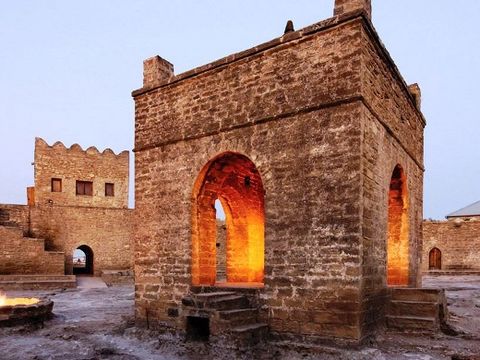
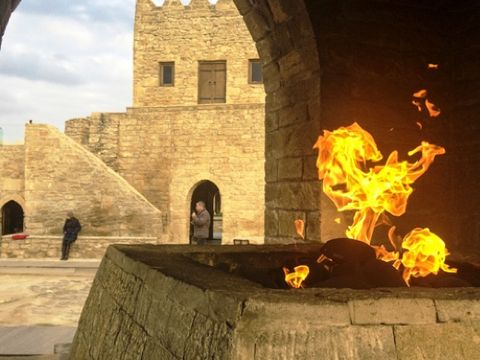
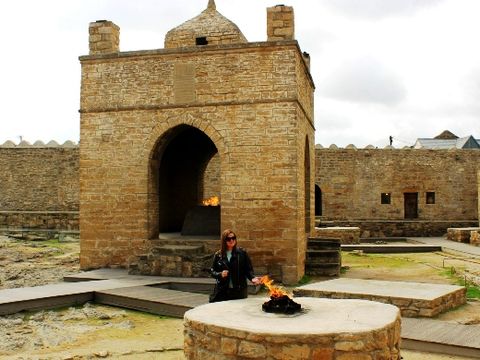
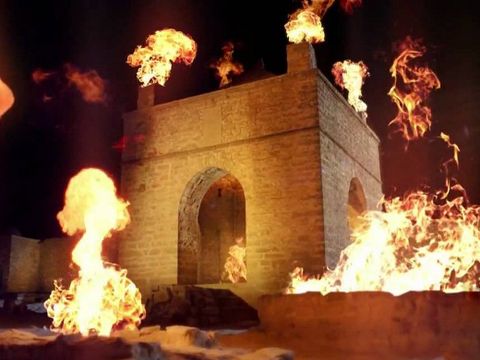
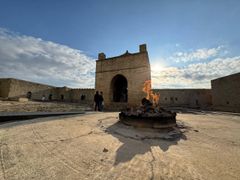
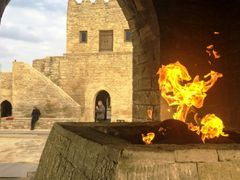
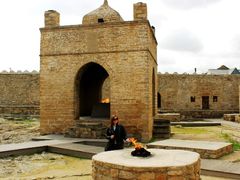
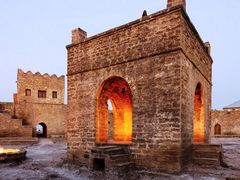
Perched on the windswept plains of the Absheron Peninsula, just outside Baku, the Ateshgah Temple stands as a remarkable testimony to a confluence of ancient religions, natural phenomena and trade-routes. Commonly called the “Fire Temple of Baku”, this temple-complex in the settlement of Surakhany (also spelled Surakhani) captures the imagination of visitors seeking not just one of Azerbaijan’s most unique attractions, but also a living link to fire-worship traditions, merchant pilgrimages and the extractive history of the Caspian region.Walking through its pentagonal courtyard, with stone-cells surrounding a central altar and still-burning gas-fed flame, one is drawn into a rich story: of Zoroastrian “eternal fires”, of Hindu and Sikh devotees journeying across trade-routes to this outpost, of local oil and gas fields that eventually changed the land. For tourists looking for “things to do in Azerbaijan”, especially “attractions in Absheron” or “attractions in Baku region”, Ateshgah offers a blend of archaeology, spiritual heritage and industrial heritage.

In this page you will find a detailed account of its history & origins, geography & hydrology, ecology & regional context, its cultural & practical importance, as well as how to visit and enjoy the site, and how it can tie into a broader tour with Old City Tours.


History & Origins

The name Ateshgah derives from Persian āteš (fire) plus -gāh (place), meaning literally “home/house of fire”. Early Fire-Worship Tradition

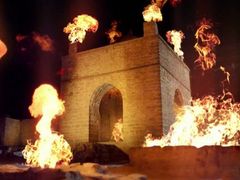
Long before the current stone complex was built, the Absheron Peninsula was known for its naturally seeping hydrocarbon vapours which ignited at the surface. Chroniclers mention “seven holes with eternal fires” in the Surakhany area. Zoroastrian fire-worshippers considered the flames a manifestation of purity and divine essence. As early as the 10th century, local texts mention fire-worship on the peninsula.

Construction of the Temple Complex

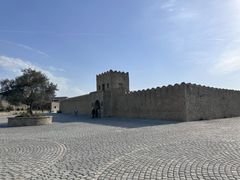
The stone temple complex visible today was constructed in its major form during the 17th-18th centuries. The presence of inscriptions in Sanskrit, Punjabi (Gurmukhi) and one in Persian, bearing dates such as Samvat 1802 (≈ 1745 CE) and Hijri 1158, confirm this period of activity. The inscriptions identify the temple as consecrated to Hindu deities such as Jwala Ji (the flame goddess) and Ganesha, but also record Zoroastrian fire symbolism.   
Pilgrims, Trade & Community

By the 18th and early 19th centuries the temple had become a pilgrimage centre for Hindus, Sikhs and Zoroastrians, notably Indian merchants trading through the Caspian route and local Persian-speaking communities. European travellers such as Engelbert Kaempfer (visited 1683) noted fire-worshippers in Surakhany.  

Decline of Natural Flames

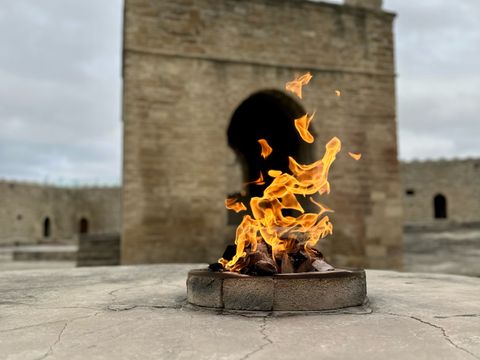
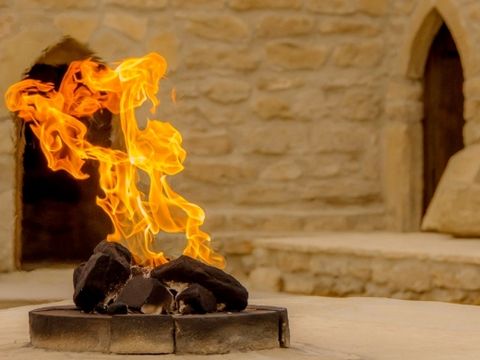
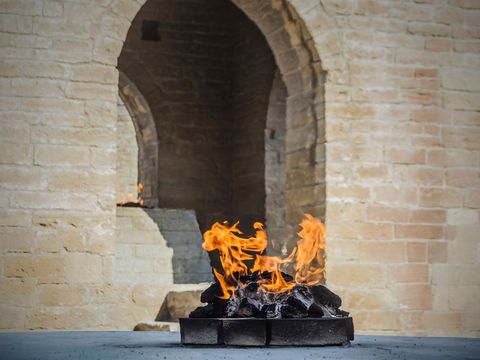
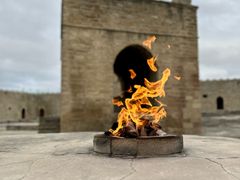
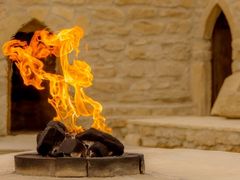
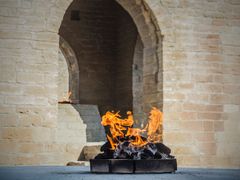
During the 19th and 20th centuries, intensive hydrocarbon extraction in the region gradually reduced the natural gas-seepage that sustained the eternal flames. The naturally burning flames at Ateshgah were extinguished in 1969 and the current flames are sustained by piped gas supply.   

Museum & Preservation Status

In 1975 the complex was converted into a museum. In December 2007 the site was declared a state historical-architectural reserve by presidential decree of Azerbaijan. The site is also on the UNESCO Tentative List under the name “Surakhany, Atashgyakh (Fire – worshippers, temple – museum at Surakhany)”.  

Geography & Hydrology

Location & Terrain

Location & TerrainAteshgah Temple is located in the settlement of Surakhany in the Surakhany Raion, on the Absheron Peninsula, Azerbaijan. The site lies approximately 25–30 km east of Baku city centre. The terrain is flat plateau-like, typical of the Absheron plain, exposed to winds from the Caspian Sea.  

Hydrology & Natural Gas Venting

The Absheron Peninsula is rich in hydrocarbon seepages; natural gas and oil-laden vapours rise towards the surface and can spontaneously ignite in places. The temple site was built over one or more natural gas vents (sometimes described as “seven holes”). The natural “eternal flames” phenomenon was a direct product of this geology. Today the flames are fed by the city’s gas network rather than natural vents. Seasonal climate: the region is semi-arid, with hot summers and mild winters, low precipitation typical of Absheron.

Ecology & Regional Context

Though the Ateshgah site itself is a built heritage complex, the wider Absheron Peninsula has ecological interest. Historically the peninsula’s sparse vegetation and exposed soils have been subject to desertification pressures, and the presence of oil-industry infrastructure has impacted the environment. The existence of natural gas vents meant that fire-phenomena were part of the landscape. Tourist education at the temple also touches on preservation of the site amid industrial development.
Flora around the site is typical of the semi-arid steppe: hardy shrubs, xerophilous grasses. Fauna includes small mammals and birds adapted to open steppe-land. While not a nature reserve per se, visitors are reminded that this is an environment shaped by both geologic and human-industrial forces.

Cultural & Practical Importance

Religious & Cultural Significance
The Ateshgah Temple stands at the crossroads of religious heritage in Azerbaijan — Zoroastrian fire-worship, Hindu devotion, Sikh pilgrimage and trade diaspora. The trident symbol (trishula) on the temple roof suggests Hindu sourcing, though Azerbaijani interpretation also links it to Zoroastrian motto “Good Thoughts, Good Words, Good Deeds”.
For the local Azerbaijani community and for Indian diaspora historians, the temple is a physical memory of centuries of inter-cultural exchange: merchants from the Indian subcontinent participating in Caspian trade, bringing their religion, rituals and inscriptions to Absheron.
Industrial & Heritage Context
The site also illustrates the transition of this region: from a sacred place of fire-worship to part of oil and gas extraction zones, then to a preserved museum-monument. It provides a meaningful case study of how natural resources shape culture and architecture. The extinguishing of the natural flames by 1969 due to gas extraction underscores this link.
Tourism Use
Today Ateshgah is an accessible tourist attraction in the Baku region, offering visitors a glimpse into ancient practices, architectural style (Shirvan-Absheron), and the narrative of fire worship. It is a must-visit site for anyone looking for “things to do in Baku” beyond the city centre.

Things to Do / Activities

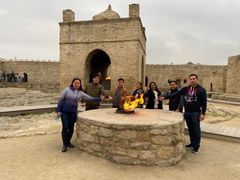
  • Walk through the pentagonal courtyard of the temple-complex, and observe the central altar and cells surrounding it. 
  • Read the inscriptions (in Sanskrit, Punjabi, Persian) and reflect on their dates and symbolic meanings. 
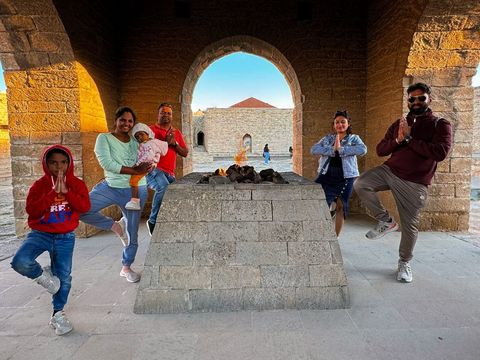
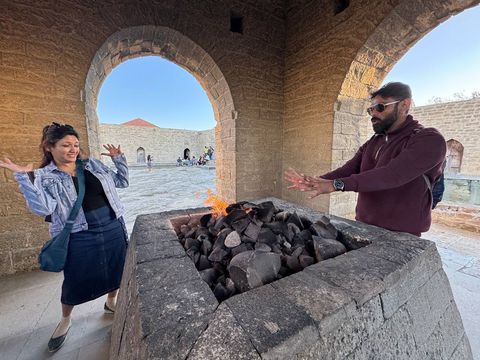
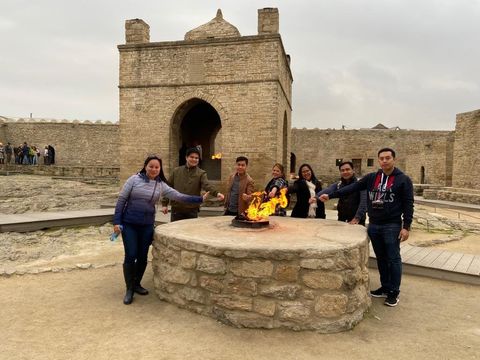
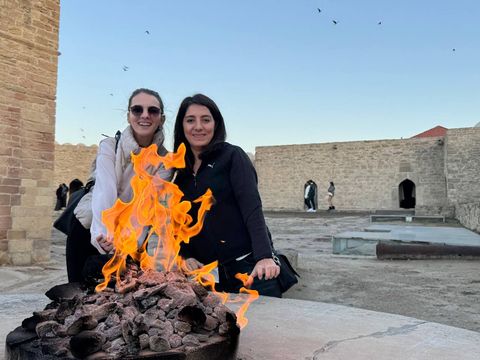
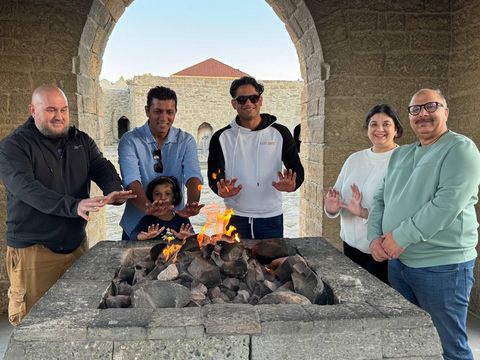
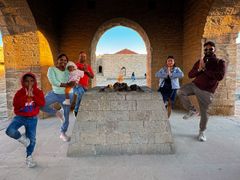
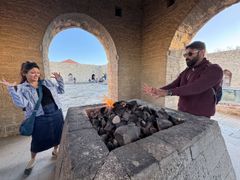
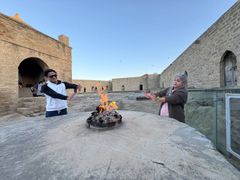
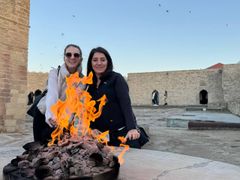
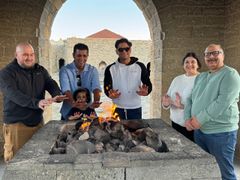
  • Stand by or photograph the still-burning flame(s) which once were naturally fed.
  • Combine a visit to Ateshgah with a short drive to the nearby natural “burning mountain” Yanardag (Fire Mountain) for a contrasting fire-phenomenon experience.
  • Use the site as a base for cultural interpretation: ask about the historic Indian merchant diaspora, the Zoroastrian pilgrims, and the architecture.
  • Enjoy the surrounding landscape: the steppe and plains of Absheron provide a unique backdrop, especially at early morning or golden-hour.
  • For photography: the symmetry of the temple, interplay of stone, flame and sky make strong compositions; evening light may enhance textures.
  • Educational visits: consider guided tours (in English/Azerbaijani) that can explain the layers of history. The official site lists guided tour options.

Visitor Information

Location: Surakhany (Surakhani) settlement, Absheron Peninsula, Azerbaijan. The temple lies roughly east-of-Baku city centre.
How to reach: From Baku, take a taxi or rental car (approx. 25–30 km depending on start point). Some tour operators include it as part of a half-day or full-day Absheron excursion.
Entrance fee (2025): According to official site: Foreign citizens: 9 AZN. Local citizens: 2 AZN. Students: 1 AZN. Guided tour (non-Azerbaijani language) 10 AZN.
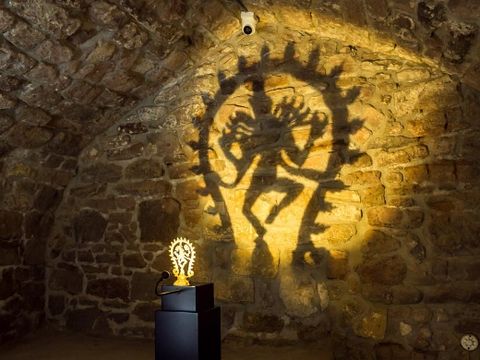
Facilities: Parking available. There is a museum inside the complex showing historical artefacts and inscriptions. Official site lists “exhibition hall – cells – gallery”.
ateshgahtemple.az

Best time to visit: Spring and autumn are ideal for comfortable weather; summer can be hot and exposed. Early morning or late afternoon provide better light and fewer crowds.
Duration of visit: Allow 1–1.5 hours for the site (including museum and external photos). If combined with Yanardag and other Absheron highlights, half-day tours of 3–4 hours are common.
Tips: Wear comfortable shoes as the ground is stone-paved and in places uneven. Respect signage around the flame; maintain a safe distance. Bring water and sun-protection as the terrain is open.

Nearby Attractions

Tours to Ateshgah Fire Temple

At Old City Tours we incorporate the Ateshgah Temple into our “Half-Day Absheron Peninsula Experience” which pairs the temple visit with a stop at Yanardag and a scenic drive along the Caspian coastline. Guests enjoy:

  • Professional English-speaking guide explaining the religious, trade and industrial heritage of the site.
  • Comfortable air-conditioned transfer from Baku city hotels (08:30–13:00 slot or 13:30–17:30).
  • Time for photo-stop, museum visit and short walk around the surroundings.
  • Optional add-on: visit to a local tea house for Azerbaijani refreshments.

This tour is excellent for travellers seeking “things to do in Baku” that go beyond the city centre and offer deeper cultural context.

FAQ

When was Ateshgah Temple built?

The present structure dates to the 17th–18th centuries, built by Indian Hindu and Sikh communities on a site of ancient fire-worship.

Was the flame always natural?

Originally yes — natural gas seeped from the earth and burned eternally. The current flame is maintained by a gas pipeline since 1969.

What religions are linked to Ateshgah?

Mainly Zoroastrianism, Hinduism, and Sikhism, each venerating fire as a symbol of purity and divine power.

How much time should I plan for the visit?

Around 1 to 1.5 hours for Ateshgah alone; half-day if combined with Yanardag or other Absheron sights.

Is there public transport to Ateshgah?

Yes, but infrequent. Most visitors use taxis or guided tours from Baku for comfort and convenience.

Is the site family-friendly?

Absolutely. It’s a safe, open-air museum with educational exhibits — ideal for families and children.

Why is it called the “Fire Temple of Baku”?

Because the temple was built around natural flames that burned endlessly — a phenomenon central to Azerbaijan’s identity as the Land of Fire.

Conclusion

The Colorful Khizi Mountains are among Azerbaijan’s most mesmerizing natural landmarks – a living canvas of geological time, where earth, wind, and iron have painted the hills in red and white. The silence of the steppe, the fossil traces of ancient seas, and the vivid color bands make this one of the country’s most unforgettable sights.
For the best experience, join a guided trip with Old City Tours – watch the colors shift in morning light, explore the striped hills safely, and connect with Azerbaijan’s incredible natural heritage.

Sources / References

  • Azerbaijan Tourism Board – azerbaijan.travel
  • UNESCO Tentative List – whc.unesco.org
  • “Ateshgah of Baku” – Wikipedia
  • AZERTAC News Agency – “Ateshgah: Fire Temple of Baku”
  • Great Soviet Encyclopedia (historical entries on Surakhany and Absheron fires)